

Distinguish between environmental career groups
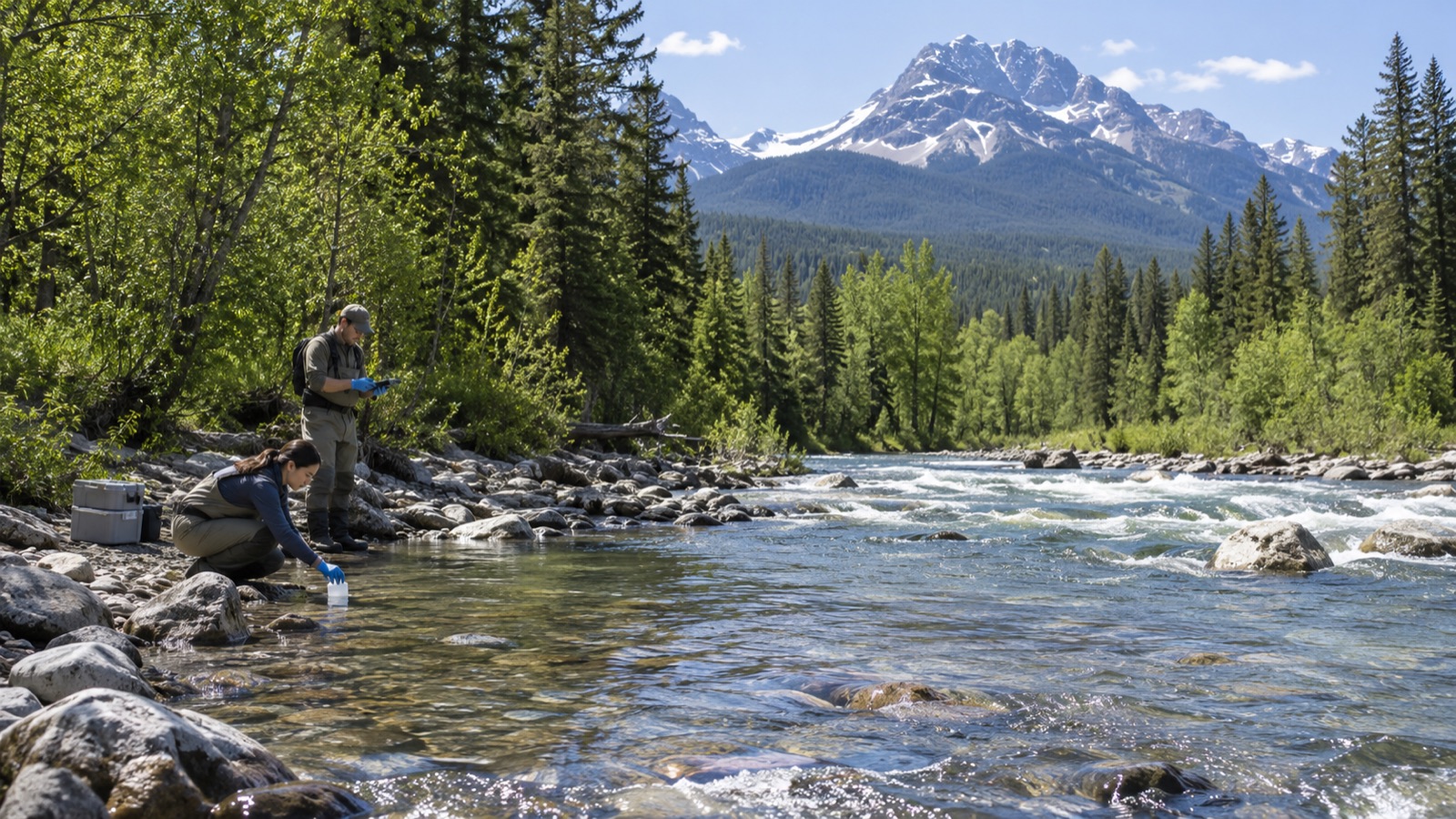
Four groups recur in job postings. Environmental science studies and monitors air, water, soil and ecosystems. Engineering designs systems: water treatment, renewable energy and pollution remediation. Compliance and management apply regulations and assess a project's impacts. Finance and public policy translate climate issues into decisions: carbon accounting, sustainable investment and policy development.
Each group has its usual entry-level qualifications: natural sciences, engineering, law, economics or business administration. A single title, such as “sustainability specialist,” can cover positions that differ considerably in nature. It is better to read several actual job descriptions and identify the skills required (modelling, data analysis, regulation, writing) than to rely on the title.
Read the U.S. projections
For the 2025-2035 period, the BLS projects 6% employment growth for environmental scientists and specialists, higher than the average for all occupations (3%). Their median salary was US$82,220 in May 2025. Entry into the profession generally requires a bachelor's degree in environmental science or a related field: natural resources, biology or physical sciences.
This figure applies to one country and a clearly defined occupational group. It does not measure environmental engineering positions, compliance positions or sustainable finance careers, which the BLS classifies elsewhere. A 6% increase over ten years represents moderate growth: it implies regular openings, but not an explosion in demand.
The BLS also notes that these projections rest on economic and regulatory assumptions, which change with each edition.
Read the World Economic Forum's signal
The WEF's Future of Jobs 2025 report, based on responses from more than 1,000 employers, places environmental engineers and renewable energy engineers among the fifteen fastest-growing roles by percentage by 2030. It also notes that environmental stewardship enters the list of the ten fastest-growing skills for the first time.
These statements reflect employers' expectations. A high percentage can start from a small workforce, and it describes a rate rather than a number of positions. The report is also global: it does not say in which countries or sectors demand will be strongest.
The two sources point in the same direction, with an important distinction. The WEF focuses mainly on engineering and skills; the BLS describes more modest growth for field scientists. The two do not contradict each other, but they do not measure the same thing.
Summarize the sources in a table
The table below brings together the figures cited. The organizations share neither a methodology nor a scope, and the figures cannot be added together.
| Source | Target group | Published signal | Period |
|---|---|---|---|
| BLS (United States) | Environmental scientists and specialists | +6% employment, median US$82,220 | 2025-2035 |
| WEF (global) | Environmental engineers | Among the 15 fastest-growing roles | by 2030 |
| WEF (global) | Renewable energy engineers | Among the 15 fastest-growing roles | by 2030 |
| WEF (global) | Environmental stewardship | Enters the 10 fastest-growing skills | by 2030 |
The scope differs from one row to another: an occupation in one country, and roles and skills in a global survey. A student who reads this table as a ranking of the most promising careers is therefore drawing a conclusion that the sources do not support. The table indicates a general direction, not the likelihood of employment for a specific program.
Choose between science and engineering
An environmental science program teaches students to observe, measure and interpret. An engineering program teaches students to design and size systems. The two lead to different jobs, with different rules governing practice: engineering is a regulated profession in most countries, whereas environmental science generally is not.
An engineering degree opens more doors to regulated roles, but it requires strong mathematics and physics skills from the outset. A science degree often offers more flexibility in course selection and can be complemented by a master's degree focused on practice or policy.
Admission requirements reflect this difference. The four-year bachelor's degree in environmental science at The University of British Columbia, with a co-op option, requires prerequisites in mathematics, chemistry and physics, for example, and offers two concentrations: land, air and water, or ecology and conservation. A final-year project, completed as a team with a partner organization, connects the education to a real-world case.
In both cases, certain skills transfer well from one position to another: data analysis, geographic information systems, report writing and knowledge of the local regulatory framework. These skills are developed through courses, internships and field projects.
Assess a program's quality beyond its ranking
The QS 2026 ranking in environmental sciences was consulted only through third-party reproductions, so no rank is cited here. It is preferable to read the table directly on the QS website rather than rely on these copies.
More than rank, several concrete features distinguish programs: the availability of placements with businesses or public agencies, access to field stations or laboratories, instructors active in applied research, and partnerships with consulting firms or municipalities.
For an engineering program, national accreditation is a basic criterion. For a science program, recognition by a professional regulatory body (biologists, geologists or agrologists) may matter if the intended career depends on it.
A final check concerns the purpose of the final-year project. A project conducted with a real organization, such as a municipality or a conservation organization, produces a deliverable that a student can show an employer. A more theoretical research thesis is better suited to those aiming for graduate studies.
Keep the limitations in mind
Three cautions apply to all green career lists:
- Projections change from one edition to another and depend on public policy.
- The “green job” category has no universal definition; figures are therefore not comparable across sources.
- Median salaries in one country do not apply to another, and they say nothing about the start of a career.
It is also useful to check what share of advertised positions belongs to the public sector, whose budgets vary with political decisions, and what share belongs to private business. Organizations that publish green employment figures sometimes promote the sector: their figures deserve to be read with the same caution as those of a professional association.
What about Canada?
In Canada, environmental professions fall under provincial jurisdiction. Environmental engineers are governed by provincial engineering regulators, and engineering programs are accredited nationally. Environmental scientists may register with professional associations of biologists, geoscientists or agrologists, depending on the province. ECO Canada, a sector organization, notably awards the EP (Environmental Professional) designation and publishes reports on the environmental labour market; the figures on its home page are undated. Employment statistics by occupation are published separately by federal and provincial organizations and do not coincide with the U.S. figures in this article.
StudyCanada features, among others, the environmental science program at The University of British Columbia, the environmental programs at the University of Waterloo (Environmental Sciences, Environment, Resources and Sustainability), the environment program at McGill University and the environmental science program at the University of Ottawa / Université d’Ottawa.