

How should you use a ranking?
QS publishes a global subject ranking that includes the Environmental Sciences category. Its 2026 edition was published on March 25, 2026. Canadian ranks are not reproduced here because the corresponding entries were not legible in the table consulted.
The QS subject methodology takes reputation and research indicators into account, among other factors. Since the methodology page is subject to change, it cannot be used to present its weightings as an archive of the 2026 edition. In any case, these indicators do not directly describe how much fieldwork a program includes or an individual student’s access to a laboratory.
A ranking can therefore help you identify institutions. To choose among them, examine the specific program, its campus and the conditions for the activities that interest you.
Universities and programs
These four examples illustrate different approaches, with no order of quality implied. Program titles are kept as they appear in the StudyCanada references; the characteristics described come from the universities. A program page guarantees neither admission nor the conditions for an upcoming academic year.
| If you mainly want to… | Program to consider | Key difference |
|---|---|---|
| Study living organisms and their environments | McGill: Environmental Biology Major | The major must be combined with a concentration. |
| Understand water and Earth systems | UBC Okanagan: Earth and Environmental Sciences | The page presents a major and an honours option, among others. |
| Analyse the environment through chemistry | Toronto: Environmental Chemistry Major | Admission to the major is limited and takes place after initial university studies. |
| Connect conservation and management | Alberta: Bachelor of Science in Environmental and Conservation Sciences | The degree includes several specializations and lists practical activities. |
These options do not reserve each subject for a single university. They give you a starting point for reviewing courses and comparing program structures.
McGill: living organisms and their environments
At McGill University, Environmental Biology Major (B.Sc.(Ag.Env.Sc.)) is an option for people interested in species and ecology. The major must be accompanied by at least one concentration. The university recommends Wildlife Biology, Applied Ecology and Plant Biology, among others.
McGill describes a field component, with laboratories outside the Macdonald Campus in Quebec. Compare the concentrations and ask which practical activities are part of the pathway you are considering: a general description does not guarantee a specific activity for your cohort.
UBC Okanagan: water and Earth systems
At The University of British Columbia, Earth and Environmental Sciences is offered here at the Okanagan campus in British Columbia. The Bachelor of Science pathway includes a major and an honours option, among others. The topics presented include hydrology and geochemistry.
Consider this option if you want to understand the physical and chemical processes of environments. Consult the information specific to Okanagan: it does not automatically describe a program at another UBC campus.
Toronto: environmental chemistry
At the University of Toronto, Environmental Chemistry Major (Science Program) is offered by the Faculty of Arts & Science. The major combines a foundation in chemistry with specialized courses. It may suit someone interested in analysing contaminants.
Initial admission to the university and subsequent enrolment in this major are two separate steps. Admission is limited and requires prior university studies and courses. Check the requirements for your year: meeting the stated thresholds does not guarantee a place.
Alberta: conservation and management decisions
At the University of Alberta, the Bachelor of Science in Environmental and Conservation Sciences lists field trips, a field school and a capstone project, among other activities. Its specializations include environmental economics and policy, as well as the human dimensions of management.
This is an option to compare if you want to connect the study of environments with decisions about their management. Ask which activities and courses are associated with the specialization that interests you.
Fieldwork: from promises to practical details
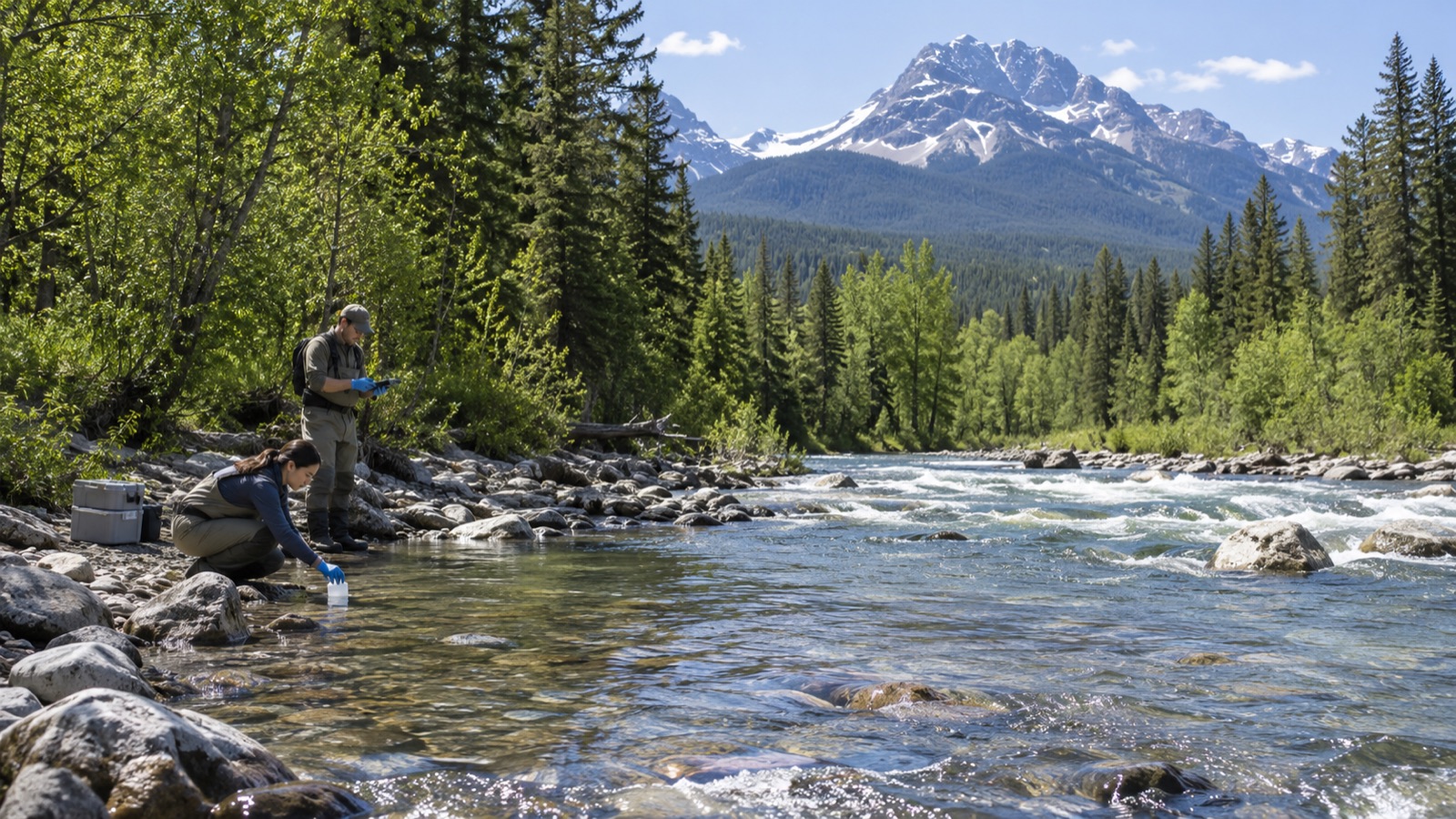
A photo of a field trip does not tell you how much fieldwork you will personally do. For each program, ask whether the activity is mandatory or optional, which courses provide access to it and which skills you will be able to practise. Also check supervision, travel, equipment and any accommodations you might need.
The University of Alberta provides two useful examples to help you prepare these questions. ENCS 299 includes off-campus experiences and a topic related to the major; a prerequisite or corequisite applies. REN R 465, which focuses on environmental and conservation field studies, has additional instructional fees and varies in content from year to year.
Ask for the fees and arrangements that apply to your academic year. A destination listed for a previous year is not a promise for the next one. At McGill, also ask which outdoor activities are linked to your chosen concentration; at UBC Okanagan and Toronto, check which courses in your program include the practical work you are looking for.
Research: what can undergraduates participate in?
A university’s research reputation does not, on its own, tell you what an undergraduate student will be able to do. You need to distinguish between a volunteer experience, a project for credit and supervised work in an honours program.
At UBC Okanagan, the department describes these opportunities separately. The research volunteering described on its page is neither paid nor for credit. Directed studies and an honours thesis have different requirements. This distinction applies to the opportunities described by that department, not to every research activity at UBC or other universities.
To compare options, ask when you can participate, which courses are required, whether a supervisor must agree to work with you, and whether the activity earns credit or pay. An advertised opportunity is something to explore, not a confirmed place.
Admission and budget: compare your circumstances
Prepare a checklist for each option with the required secondary school credential, prerequisite subjects, language of instruction, documents and deadline for your intended academic year. Add a line about access to the major after admission: the Toronto example shows that admission to the university does not necessarily guarantee access to the pathway you want.
For students with an international secondary school background, UBC distinguishes general requirements from credential-specific ones and asks applicants, among other things, to select a campus and country of schooling. This information is specific to UBC; it does not replace another university’s rules and should not automatically be applied to an application from a Canadian school system.
Next, compare the full budget. In addition to tuition, plan for housing, food, books, insurance and travel, as well as any fieldwork fees. Check the amounts that apply to your program, campus, status and academic year: financial terms for Canadian and international students are not necessarily interchangeable. Do not count on a scholarship or research income unless it has been confirmed for you.
Your checklist for comparing options
Once you have shortlisted two or three options, ask each institution the same questions:
- Subject: Which courses match what I want to understand?
- Structure: Do I need to choose a concentration or meet additional requirements to enter the major?
- Practical experience: Which activities are available in my program, and what prerequisites and fees apply?
- Research: Can I participate in a project, under what conditions and with what supervision?
- Feasibility: Do my application and budget meet the requirements for my intended academic year?
If you are considering a regulated profession, also check with the relevant regulatory body. In geosciences, UBC Okanagan’s calendar notes that professional authorization is handled by organizations outside the university. Course selection may matter, but a degree does not automatically grant professional registration.
The best option for you is one whose scientific appeal and practical requirements you can both explain.