

Start with the recipient's exact request
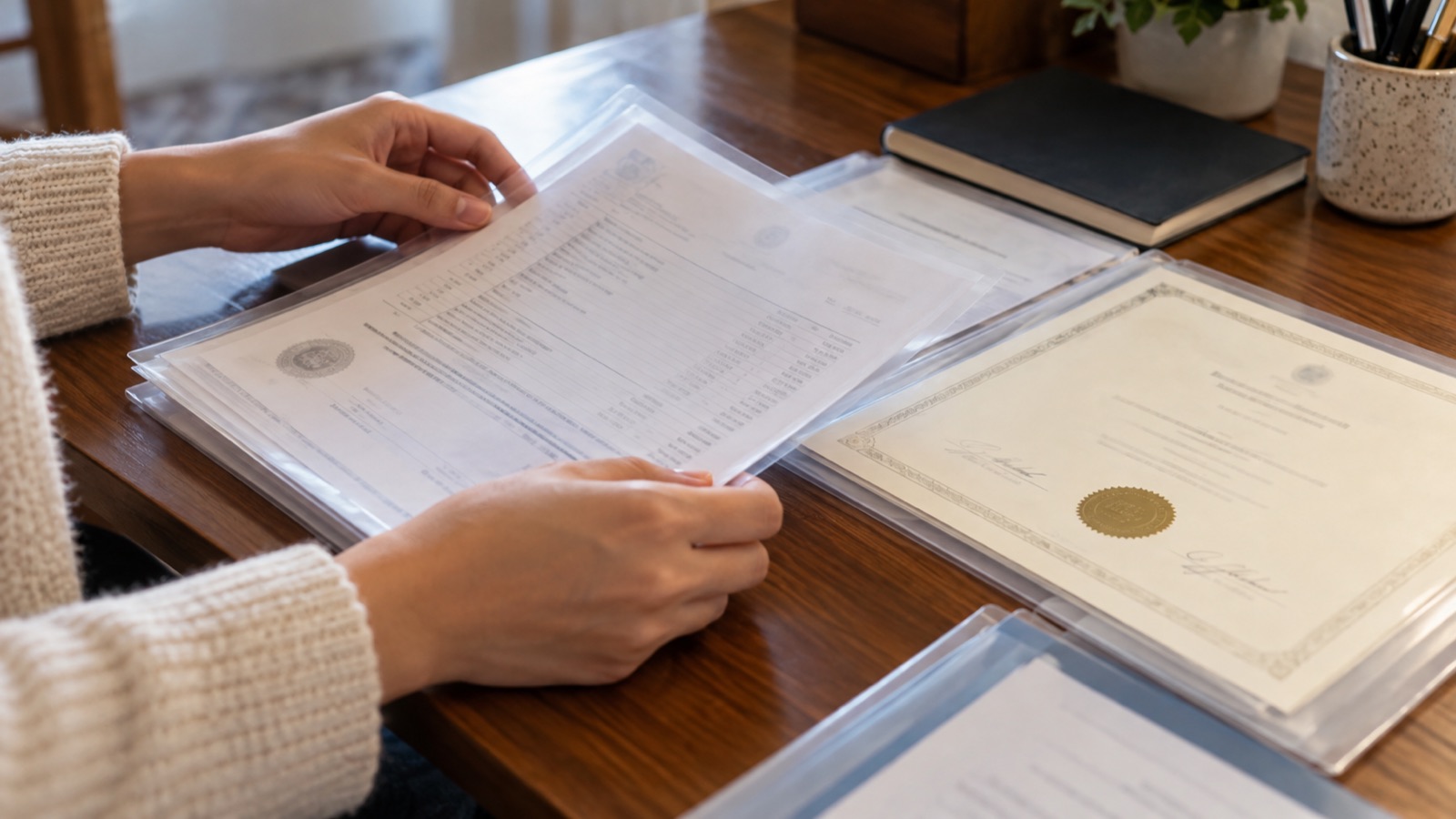
A diploma, transcript, certified copy and translation do not serve the same function. Before having documents prepared, identify the organisation requesting them and their intended use: admission, credit recognition, immigration, professional practice or returning to your country. Each recipient may require a different format and procedure. A document accepted for one process will not automatically be accepted for another.
Create a list using the exact wording of the instructions. For each document, note the format, language, submission method and deadline. Add the organisation that must produce it. This preparation prevents paying for certification or translation that does not match the request and wasting time preparing the same file again.
If the instruction remains ambiguous, send a precise question to the relevant service. Describe the document you have without unnecessarily sharing personal information. Ask whether a scanned copy is enough for the initial review and what will be needed afterwards. The answer needs to distinguish provisional stages from final documents.
Distinguish originals, copies and official transmission
An original is the document issued according to the issuing organisation's procedures. A copy may be a plain copy or accompanied by certification meeting the recipient's rules. A transcript may also need to be sent directly by the originating institution. These arrangements are not interchangeable: the quality of a scan does not replace official transmission when it is required.
Ask your former institution how to obtain documents and how long it takes. Check whether it can send an electronic transcript through a recognised channel or produce copies for several organisations. If a sealed envelope is required, follow the instructions on opening and forwarding it. Do not change the format for convenience without confirmation.
Keep personal copies, even when an original must be sent. Note the contents of the submission, date and method used. Ask whether originals will be returned and how. A document that is difficult to replace should not be sent simply because a general list found elsewhere seemed to recommend it.
Have translations prepared under the applicable rules
A translation needs to make the document understandable without changing its meaning. Check who is authorised to translate it for the intended process, which elements must be translated and how the original must accompany it. Request a quotation specifying pages, timing and any certifications. Stamps, annotations and appended pages may form part of the document to be examined.
Quebec's rules on immigration documents set out precise requirements for translations and certified copies. They illustrate the importance of the recipient: these rules apply to the processes specified by that ministry and do not automatically constitute every school's instructions. For admission, use the institution's list.
Review the translation's factual information: names, dates, subjects and results. Report an error to the translator rather than correcting the certified file yourself. Do not request replacement of a foreign qualification name with a supposedly equivalent Canadian title. Translation makes the text accessible; equivalence is determined through a separate assessment.
Understand the scope of an apostille or authentication
Some documents intended for use abroad may require an authentication formality. First ask the recipient whether it is required and in what form. Do not have every document apostilled as a precaution without checking the procedure's usefulness. The competent authority and procedure depend, among other things, on the document and where it was issued or notarised.
Global Affairs Canada's advice on Canadian documents used abroad explains how to determine which authority to contact. This formality must not be confused with a decision on a qualification's level or the right to practise a profession. It addresses a different question in the document process.
If a translation is also needed, ask in which order to carry out the steps and which elements must be covered. Keep the recipient's and relevant authority's instructions. Coherent preparation prevents sending an incomplete document or having to start again because a document added later is not included in the expected formality.
Present an understandable educational history
An academic record may involve several institutions, name changes or interruptions. Prepare a short chronology with dates and qualifications obtained. Link each stage to the corresponding documents. If the grading system is unusual, ask whether the originating institution can provide an official explanation rather than inventing your own conversion.
When the final diploma is not yet available, ask which provisional documents are accepted and when to replace them. A statement of successful completion and a transcript may meet certain needs, but only the recipient can confirm their sufficiency. Record this condition in your calendar so you do not forget the final submission after admission.
If a document is impossible to obtain, explain the situation with available evidence and ask about the designated procedure. Never attempt to recreate an official document. Organisations may have particular procedures depending on circumstances, but these must be confirmed. A documentary difficulty is handled more reliably through a transparent request than through an approximation presented as an original.
Organise files and protect information
Name files clearly, without multiplying indistinguishable versions. Keep a folder of scanned originals and a folder of documents actually submitted. Check legibility, page order and permitted file size. A cropped, blurred or incomplete transcript may cause a delay even when essential information appears visible at first glance.
Use the channels specified by the recipient. If an unexpected message requests a sensitive document or a new payment, verify its authenticity through official contact details you already know. Avoid publicly sharing transcripts, identity numbers or signatures to request general advice. An anonymised example is often enough to explain a question.
Fictional example: an applicant prepares a translation before reading the instructions and discovers that direct transmission of the transcript is also required. She reorganises the file into three separate stages: issue, translation and official submission. The problem was not the document's quality, but a missing procedural stage.
Check receipt until the file is closed
After each transmission, keep the confirmation and track the status. A sent document may be awaiting processing, accepted or considered insufficient. If a supplementary request arrives, reply by identifying precisely the document being replaced and its new version. This clarity helps the service connect the information.
Finally, keep instructions and decisions useful for the next steps in your pathway. You may need the same documents for a transfer, an application for further studies or recognition when you return. A well-organised file reduces future work while reminding you that a new process may require an updated format or different transmission.
Plan a final review with someone you trust. They can check that every page is present, names are consistent and each document matches the request, without judging your eligibility. Limit their access to the information needed and retrieve shared copies once the check is complete. An outside reader sometimes spots a filing error you no longer notice after repeatedly reading the same application.