

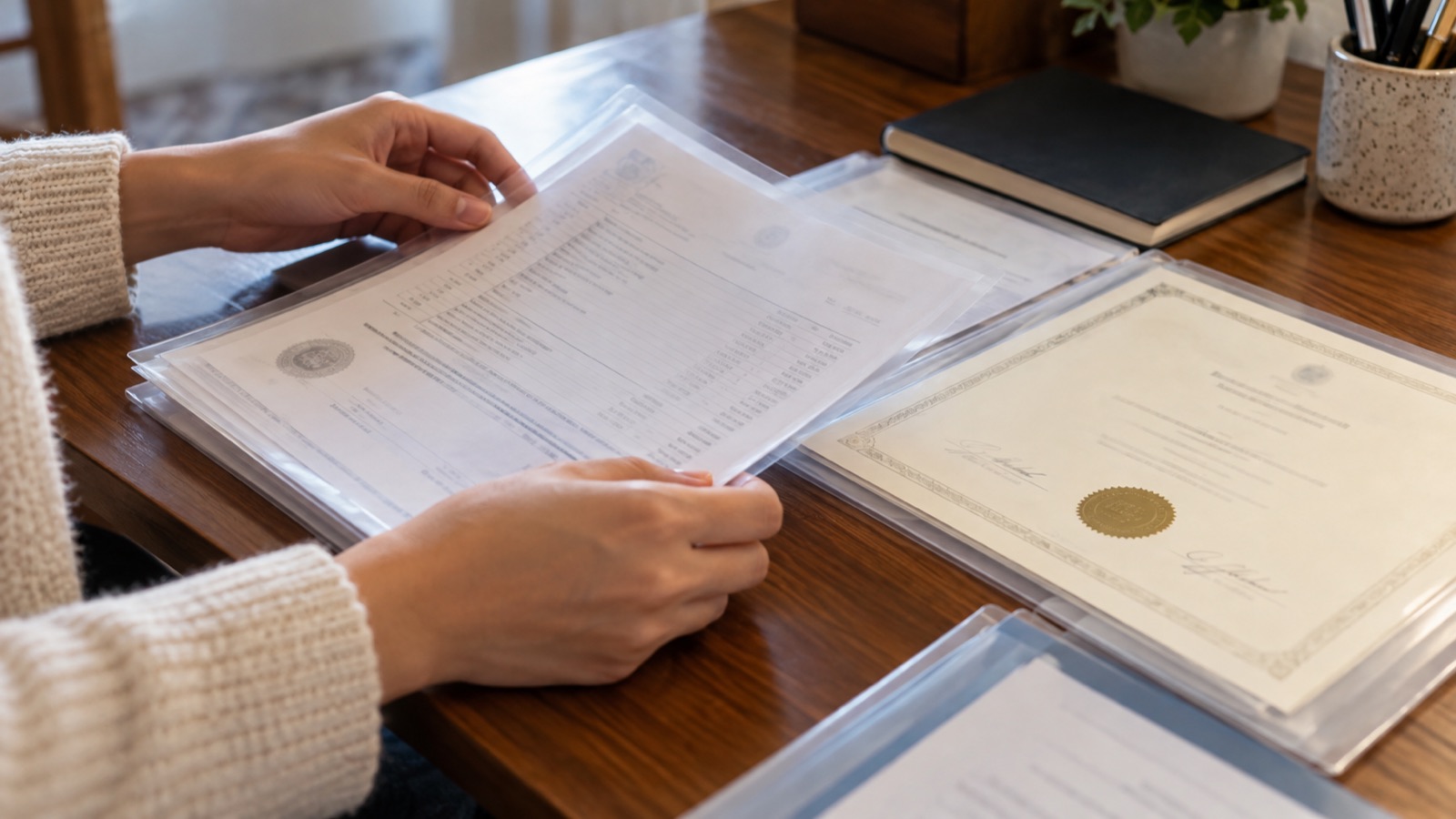
Thai credentials: each university assesses them independently
The term “equivalency” here does not mean an automatic equivalence that applies everywhere in Canada. Provide the exact name of your credential and details of your studies, then check how each institution assesses your background.
At the undergraduate level, McGill University lists Matayom Suksa 6 among the Thai credentials considered for admission. Its inclusion does not guarantee a place. For this applicant category, McGill also states that vocational or technical studies are not normally an acceptable basis for admission.
For Thailand, Université Laval lists requirements for undergraduate studies that include 12 years of pre-university schooling and postsecondary studies. Preparatory schooling may be necessary in some cases for a program that is not subject to enrolment limits. Check with Laval about any additional studies expected and the requirements for your chosen program.
At the graduate level, Laval’s table lists a Bachelor’s Degree as the minimum credential for a master’s degree and a Master’s Degree for a doctoral degree, among other requirements. The program’s specific requirements continue to apply. These examples describe the criteria of 2 institutions, not a ranking or a national rule.
Universities and programs: compare before choosing
The StudyCanada profiles for McGill University and Université Laval offer 2 starting points. Their official information can help you compare how they assess a Thai educational background, as well as the documents and language requirements. The profiles do not confirm that a program is open or that you are eligible.
For each program you are considering, prepare a fact sheet listing the required credential and prerequisite courses, language requirements, documents, deadline and published fees. Then compare these requirements with your background and the date you will be able to obtain your transcripts. If a requirement is unclear, ask the institution before applying.
Documents and languages: prepare 2 application files
Ask your Thai institution which transcripts and certificates it can provide. Then compare the university’s instructions with those of Immigration, Refugees and Citizenship Canada (IRCC): the same document does not necessarily meet the requirements of both recipients.
For undergraduate applications to McGill, the grading scale must be provided if it is missing from the transcript. Transcripts that are not in French or English must be accompanied by a certified translation; the university may also request official documents.
For a study permit, selecting “Thailand” in IRCC’s paper application package leads to the additional checklist IMM 5819 for the Bangkok visa office. The version consulted, dated February 2026, requests, among other things, academic documents, proof of financial support and a personal study plan of no more than 1 page. Read it alongside the instructions that apply to your application at the time you submit it.
Federal translation rules are separate from the university’s rules. IRCC’s guide requires an affidavit if the translation is not completed by a certified translator in Canada; applicants and their family members cannot translate documents intended for IRCC themselves.
Before booking a language test, check which forms of proof and exemptions your program accepts. For example, McGill lists a minimum IELTS Academic score of 6.5 for undergraduate studies, with at least 6.0 in each component, and does not accept the One Skill Retake. This is not a universal Canadian threshold.
For a study plan in French, Laval identifies the TCF as a reference. It indicates that DELF or TEF results less than 2 years old may be accepted if they include written expression. Also check the requirements for your specific program.
Study permit, attestation and CAQ
A study permit is generally required for studies lasting more than 6 months, subject to exceptions. The application includes, among other things, a letter of acceptance from a designated learning institution, proof of identity and proof of financial resources. Other documents may be required. Also check which documents you need to enter Canada: these are not the same as authorization to study.
A provincial or territorial attestation letter (PAL or TAL) is required in many cases. Since January 1, 2026, an exemption applies, in particular, to programs leading to a master’s or doctoral degree at a designated public institution. It does not automatically extend to all graduate certificates.
In Quebec, also check the process for obtaining the Certificat d’acceptation du Québec (CAQ). When the attestation of its issuance includes the wording required by IRCC, it serves as a PAL. A federal PAL exemption does not automatically exempt you from Quebec’s requirement.
Proof of funds: distinguish the threshold from the full budget
The amounts you must demonstrate depend, among other things, on your destination, the date you apply and the number of people. Here are the figures consulted for 1 person:
| Destination and applicable date | Annual amount | Expenses to cover separately |
|---|---|---|
| Outside Quebec, applications from September 1, 2026 | 23,448 CAD for living expenses | Tuition and transportation |
| Quebec, from January 1, 2026 | 24,617 CAD for essential needs | Tuition and round-trip transportation |
The categories are not identical: in Quebec, essential needs include, among other things, establishment costs and health and hospitalization insurance. These figures do not represent the total cost of your plans and are not the rates for a family. Check the amounts in effect when you apply.
IRCC requires you to demonstrate that you have the resources needed for the first year and, for a longer program, explain how you will fund your studies in full, without relying on employment in Canada. The Bangkok checklist requests, among other things, documents relating to financial support and the source of funds. If another person is contributing, check what evidence is needed to show their support and your relationship.
To build your budget, add your expected living expenses, tuition and transportation, then match each source of funds to supporting evidence. A scholarship that covers only tuition does not, by itself, demonstrate that you can cover other expenses.
Biometrics, medical exam and timelines: build your schedule
If a new biometrics collection is required, IRCC will send an instruction letter. Its directory includes a centre in Bangkok. IRCC indicates that you have 30 days after receiving the letter to provide your biometrics; follow the instructions you receive. Booking is free, and you must bring the letter and a valid passport.
The federal fees displayed at the time of consultation were 150 CAD for a study permit and 85 CAD for individual biometrics, when required. Other expenses, including translation or a medical exam, may also apply.
Thailand is on the list of countries for which an immigration medical exam may be required. For a planned stay in Canada of more than 6 months, an exam is required, among other circumstances, after spending at least 6 consecutive months in 1 or more designated countries during the year before arrival. Other situations may also make an exam necessary. The requirement is therefore not based solely on Thai citizenship; when an exam is required, it must be completed by a designated physician.
Build 2 schedules: first, deadlines for admission, transcripts and tests; then, acceptance, attestations, the study permit application and any biometrics appointment. To estimate study permit processing times, consult IRCC’s tool and select the appropriate category and country. The result is an estimate, not a guarantee that a decision will be made before the start of term.
Scholarships: an exchange opportunity for Thailand
The federal Scholarships and Educational Exchanges for Development – Phase 2 (SEED-2) program includes Thailand among the eligible countries. It supports temporary study or research visits related to sustainable development. The Canadian institution submits the application.
Conditions include, among other things, citizenship of an eligible country, full-time enrolment at a postsecondary institution in an eligible country, and payment of tuition to that institution during the exchange. The funding scale includes 10,200 CAD for 4 months, among other amounts. This is not an automatic scholarship to fund a complete Canadian degree.
The institutional deadline for the call consulted was March 24, 2026; it has passed. Selected applicants may arrive up to February 1, 2027, but this arrival date is not a new application deadline. If you are interested in an exchange, contact the international office at your home institution and check future official announcements. When preparing your proof of funds, distinguish between funding you are considering and funding that has actually been awarded.