

From a Moroccan credential to a Canadian level of study
The same terms do not always refer to the same level of study. On its page for applicants who studied in Morocco, the University of Ottawa suggests the following comparisons:
| Moroccan credential | Reference point in the Canadian system |
|---|---|
| Baccalauréat | Secondary school completion credential |
| Licence | Undergraduate bachelor’s degree |
| Master | Master’s degree |
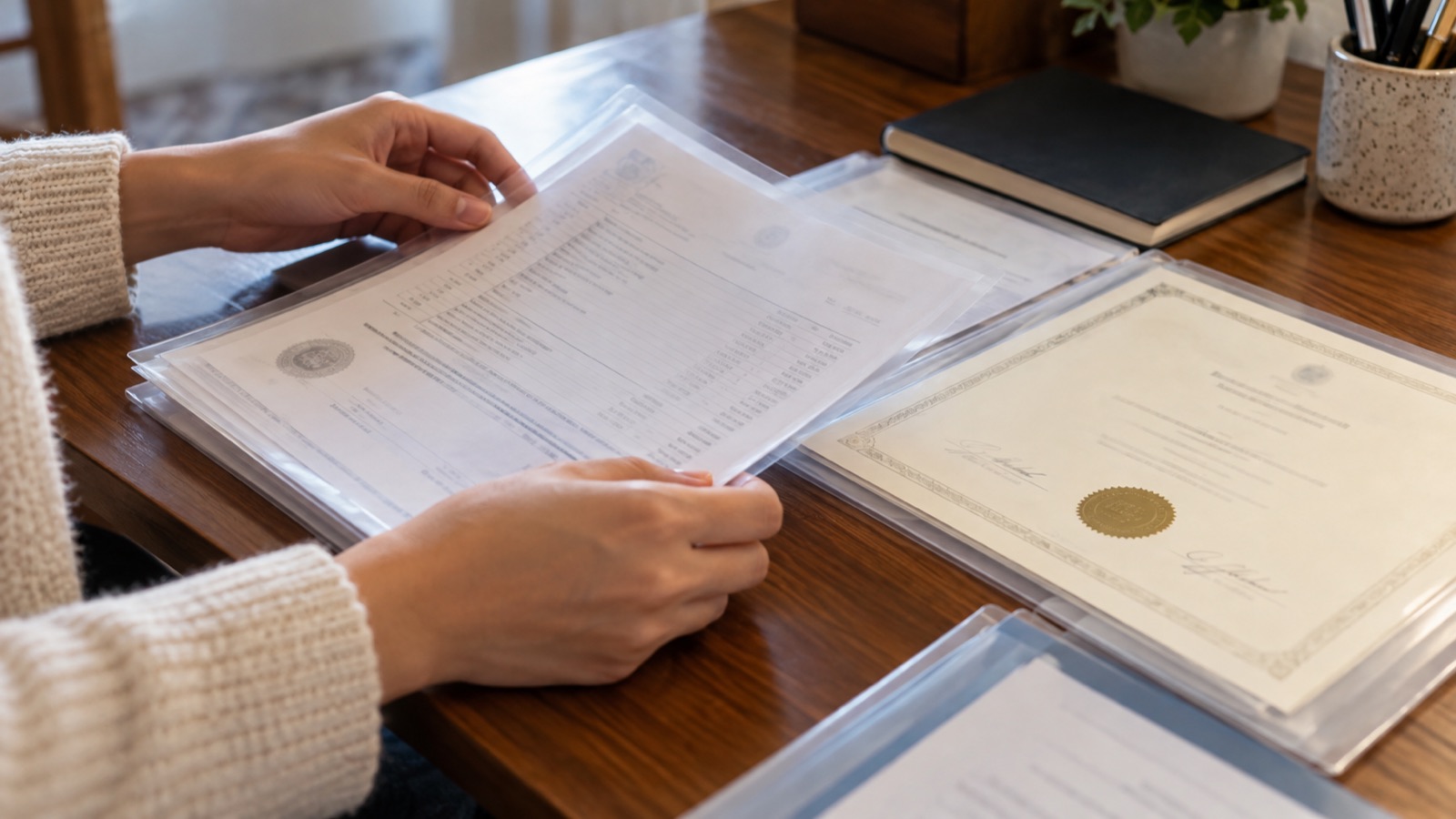
These reference points can help you interpret admission requirements, but they do not constitute an automatic individual equivalency. Keep the official name of your credential, your transcripts and details of the subjects you studied. The university will assess your academic background according to its own criteria and those of the program.
For graduate studies, Université Laval cites the licence among the minimum credentials for second-cycle studies, and the master, DESA or DESS for doctoral studies. These indications apply specifically to Laval: meeting the minimum credential requirement does not exempt you from the program’s other conditions.
Universities and programs: comparing two examples
The StudyCanada profiles for Université Laval and the University of Ottawa introduce two institutions. Their official pages for applicants from Morocco show why you need to examine each institution’s requirements.
| Institution | Undergraduate reference point | Limitation to keep in mind |
|---|---|---|
| Université Laval, Quebec | Normally, a terminal pre-university diploma covering 12 years of schooling and one successful year of postsecondary study | Preparatory studies may be considered for non-quota programs, but are not guaranteed |
| University of Ottawa, Ontario | For applicants from Moroccan secondary school: a completed or in-progress baccalaureate and a posted minimum of 16/20 | Some programs require higher marks; postsecondary studies are subject to different requirements |
This table compares institutional requirements: it is neither a ranking nor a rule that applies everywhere in Canada. For each program you are considering, note the required credential, prerequisite subjects, language requirements, documents, fees and deadline. Then check the program’s official requirements: an institutional profile does not confirm your eligibility.
Documents and language: prepare separate application packages
Organize your documents by recipient: the university, Quebec authorities if required for your plans, and then Immigration, Refugees and Citizenship Canada, or IRCC. Documents for admission are not necessarily the same as those for a study permit.
For a federal application, the additional checklist for the Rabat visa office, IMM 5846 F, February 2026 version, mentions, among other things:
- diplomas, transcripts and school certificates from the baccalaureate years onward;
- relevant employment or internship certificates;
- for people aged 18 and over, the Moroccan anthropometric record and police certificates from countries where they have lived for more than six months;
- Schedule 1 when certain answers to questions about background make it necessary.
The checklist requires a certified translation and a copy of the original for documents that are in neither French nor English. Read it together with IRCC’s Guide 5269 and the instructions for your application: additional documents may be required depending on your situation. Check the university’s separate instructions for translation and submission.
Do you need to take a language test? Your nationality alone does not answer this question. At Laval, applicants whose previous studies were not in French may be invited to take the TCF. The university also indicates that some DELF or TEF results less than two years old may be accepted if they include the written-expression component. Before booking a test, check which tests, exemptions and results are accepted for your chosen program.
Admission, attestation letters and permits: who decides what?
Admission to a university does not guarantee a study permit. A federal application generally includes a letter of acceptance from a designated learning institution, proof of financial support and, unless exempt, a provincial or territorial attestation letter, known as a PAL or TAL.
As of January 1, 2026, IRCC exempts, among others, applications for programs leading to a master’s or doctoral degree at a designated public institution from the PAL or TAL requirement. This exemption does not automatically extend to all graduate programs.
In Quebec, a Quebec Acceptance Certificate, or CAQ, is generally required. When its attestation of issuance includes the wording required by IRCC, it can serve as a PAL. A federal PAL exemption does not automatically remove the Quebec application requirement.
Quebec also sets annual application intake caps by institution for certain temporary selection applications submitted between December 17, 2025 and December 16, 2027. Exemptions exist. Check the provincial rules before applying, and do not assume that an institution has spaces available.
Another pathway to consider is the Francophone Minority Communities Student Pilot. Morocco is among the eligible countries of citizenship, but citizenship alone is not sufficient: applicants must also meet requirements related to a participating institution and program of study. The pilot has its own financial thresholds.
Finally, the Student Direct Stream closed on November 8, 2024. Do not build your timeline around a former processing time associated with this stream.
Proof of funds: distinguish the threshold from the total cost
Your destination, application date, number of people and application stream all matter when choosing the appropriate financial threshold. Here are the amounts posted on November 6, 2026 for one person; they may change.
| Applicable framework | Annual amount | Expenses to add |
|---|---|---|
| General threshold outside Quebec, for an application submitted on or after September 1, 2026 | CA$23,448 for living expenses | Tuition and transportation |
| Quebec, for an application submitted on or after January 1, 2026 | CA$24,617 for basic needs | Tuition and round-trip international travel |
The categories do not cover exactly the same expenses. In Quebec, basic needs include, among other things, settlement and health and hospitalization insurance. The amount outside Quebec is a general threshold, not a universal minimum: the Francophone pilot has separate thresholds depending on the community. Amounts also vary with the number of people.
IRCC requires you to demonstrate sufficient funds without relying on employment in Canada. For a program lasting more than one year, you must prove that you have funds for the first year and explain how you will finance the rest. Depending on your application, supporting documents may include bank statements, proof of a loan, a scholarship confirmation or documents relating to family support.
Also distinguish proof of financial support from the rules for transferring funds. IRCC states that if your country has exchange controls, you must prove that you are authorized to export the funds needed for your expenses. Check the requirements that apply in Morocco with the relevant organizations and your bank.
To build your budget, first list tuition, basic needs and travel. Then match each source of funds to a supporting document and keep any assistance that has not yet been awarded separate.
Biometrics, fees and processing times: build your timeline
If IRCC asks you for biometrics, follow the letter of instruction to provide your fingerprints and photo. The federal directory lists a visa application centre in Rabat. Check its services and appointment arrangements before travelling.
The federal fees shown when the information was checked are CA$150 for a study permit and CA$85 for individual biometrics, when required and subject to a fee. These fees may change; translation, travel and other procedures may involve additional costs.
For federal processing, use IRCC’s “Check current processing times” tool and select the relevant category and country. The result is a variable estimate, not a guaranteed date.
Quebec has a decision target of 25 business days for 80% of temporary selection applications for studies. This is a provincial target, separate from federal processing, and not an individual guarantee. The time spent waiting for missing documents is excluded from the ministry’s calculation.
Working backward from your intended start date, list admission deadlines, when academic results will be available, any language test, attestation letters, the permit application and biometrics separately. Allow extra time for requests for additional documents rather than adding estimates together as if they were certain processing times.
Scholarships and exemptions: two options to consider
Morocco is among the countries covered by Quebec agreements for exemptions from additional tuition fees. The exemption is not automatic: an application must be recommended by the designated official and meet the other conditions. Quebec indicates, among other requirements, continuous full-time enrolment in the fall and winter in a program leading to a university degree, as well as the required authorizations.
Quebec’s list of country contacts for exemptions can help you find the appropriate person to learn about the criteria and procedure that apply to Morocco. An exemption from additional tuition fees should not be confused with an allowance that necessarily covers housing, meals or travel.
Another possibility, not restricted to Moroccans, is the University of Ottawa’s Partial Tuition Fee Exemption Scholarship for Francophone International Students for certain studies in French or in immersion. Check its conditions and coverage in relation to your plans.
Before including funding in your financial plan, ask what it covers, how to apply and whether it has already been confirmed. Admission, financial assistance or proof of funds alone does not guarantee that a permit will be issued.