

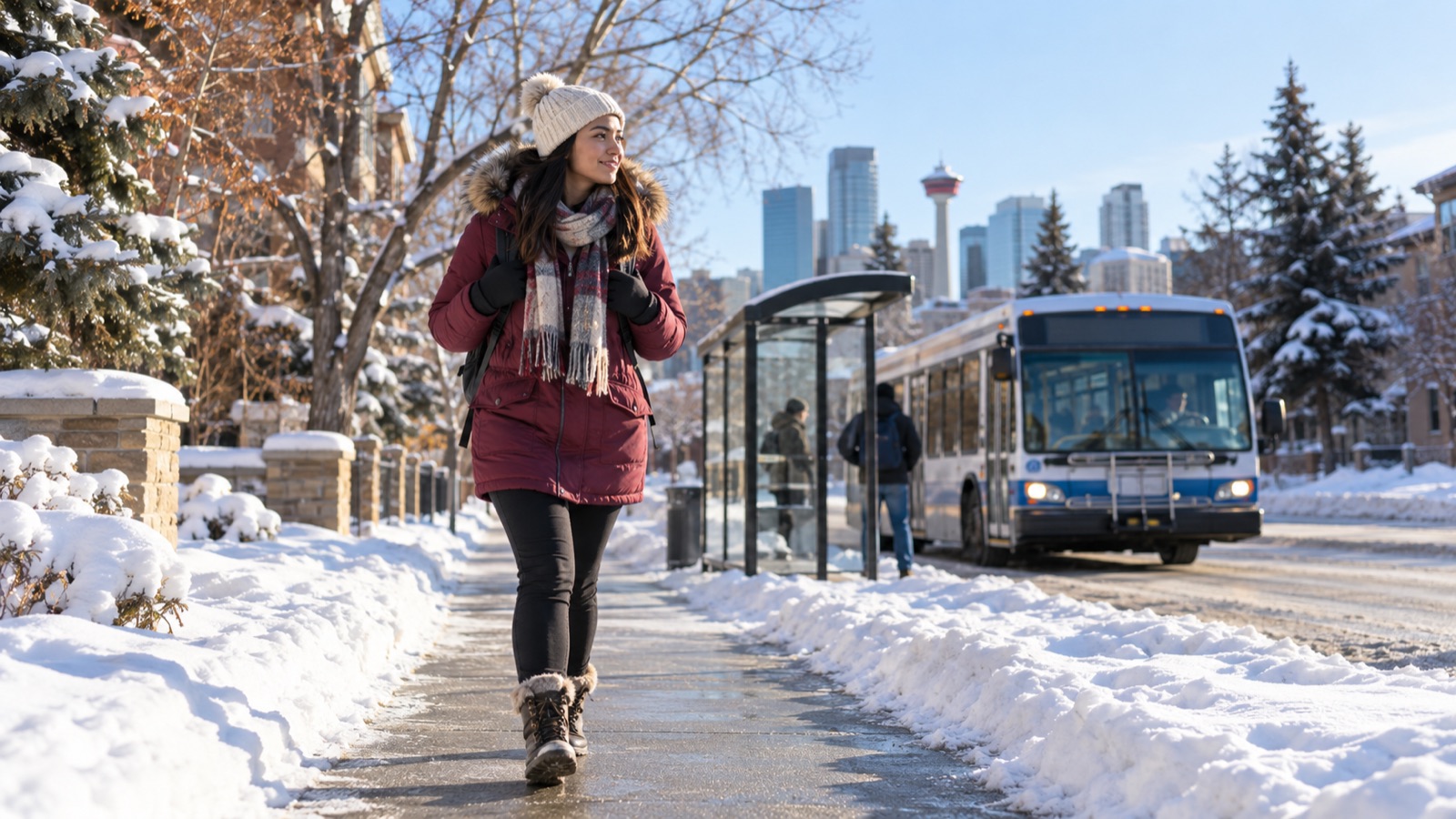
A question of location, date and lifestyle
Asking whether Canada is cold is insufficient preparation. Specify the city, month, time outdoors and transport. Two students in the same metropolitan area may face very different constraints: one reaches classes in five minutes, while another waits for two buses before morning classes. Weather protection needs therefore involve more than the announced temperature.
The country has diverse conditions. The official land and climate page notes that rain often replaces winter snow in southwestern coastal British Columbia. This does not mean the whole province shares that climate or snow is impossible there. Avoid transferring Vancouver descriptions to inland or mountain campuses.
Start with a personal sheet: campus address, attendance periods, daily route, planned activities and housing characteristics. Use it to choose equipment and ask current students practical questions. “The last bus leaves before my workshop finishes” helps more than general judgements about pleasant or difficult winter cities.
Read weather information to make decisions
Daily forecasts answer an operational question: how to dress and travel today? Climate descriptions help anticipate usual seasonal conditions. Official seasonal forecasts are probabilistic; they do not specify exact weather on arrival day. Remember this when booking activities far ahead or choosing baggage contents.
In the morning, consider temperature, precipitation, wind, changes through the day and local alerts together. A dry start may require waterproof clothing for returning. If staying in the laboratory until evening, check that hour too. Preparing only the outward journey can leave you waiting outdoors as conditions change.
Prioritise information matching where you actually will be. Out-of-town excursions require destination and access checks. If supervised activities are cancelled for weather, do not conclude you can simply do them independently. Ask for another date or replacement program; paid reservations do not improve conditions.
Organise winter travel
During the first week, test the campus route without urgent commitments. Locate actually open entrances, sheltered waiting spaces, stops and distances between buildings. Map points do not always match cold-season entrances. Photograph stop names and save routes before losing connection.
Add reasonable time when conditions deteriorate without arbitrarily using the same buffer every day. Check carrier and institution communications. If classes continue but your route becomes impracticable, inform the teacher under the applicable procedure. Keep the message; do not assume your neighbourhood's incident is automatically known to all teaching staff.
Equipment should fit actual movements: walking, waiting, carrying bags and entering heated rooms. Try the entire outfit before long outings. Check whether bags compress coats, footwear suits walking and essential objects can be handled with protected hands. The winter clothing article develops this choice without turning this guide into a shopping catalogue.
Remember heat and rainy days
Stays starting in autumn may continue until the following summer's end. When comparing accommodation, ask about hot periods: ventilation possibilities, sun protection, permitted equipment and operating costs. Detailed answers and recent photos help more than “comfortable” in listings.
Consider academic work too. Can you study in the library when your room is difficult to use? Do opening hours cover examinations? Is there indoor space to dry clothing without disturbing roommates? Such questions connect climate with studying and avoid expensive purchases before discovering available nearby solutions.
For summer activities or rainy outings, prepare alternatives preserving the day's interest. Museums, workshops or campus meetings can replace outdoor excursions. This maintains social connections and city exploration when original plans do not fit forecast conditions.
An example week to adapt
In a fictional example, Sofia has three class days, one independent-study day and an evening workshop. She keeps a short equipment list based on forecasts in her bag and checks return schedules before the workshop. She identifies two open places to wait for buses. When alerts change services, she consults her institution before leaving rather than discovering the situation at an empty stop.
Her method does not involve buying everything on arrival. During early weeks, she records actual omissions: better rain protection, footwear suited to her route or a more practical bag. She distinguishes these from occasional excursion purchases, first asking organisers what is provided or borrowable.
Benefits extend beyond comfort. Sofia protects reading time, manages spending better and knows whom to contact about disrupted travel. The same reasoning applies in small towns, with different solutions: fewer routes may make coordinating outings with other students more useful.
Prepare for each seasonal change
At a new term's start, revisit your practical sheet. Timetables, activity buildings or accommodation locations may have changed. Reassess routes from these circumstances. Climate remains a location characteristic; daily exposure changes with schedules.
Set aside money for small adjustments rather than a vague “winter” budget. Record clothing, care, occasional transport and outings separately. For apparently urgent purchases, ask what concrete problem they solve and how often they will be used. Prioritise lasting solutions or suitable borrowing rather than extreme equipment for ordinary uses.
Finally, do not reduce your stay to a feared season. Preparing for constraints leaves more freedom to discover changing landscapes, activities and local habits. Aim to build routines compatible with studies, comfort and today's information rather than endure the same conditions as everyone else.