

Prepare for your city and journeys
Canadian winter cannot be reduced to one national temperature. Preparation depends on your study location, season and time outside. A short residence-to-class journey differs from long waits at transport stops or outdoor activities.
Consult local forecasts and ask welcome services about useful equipment in your environment. Note exposure periods: early departures, travel between campuses, returning after activities or walking to shops. This concrete description helps you choose suitable clothing.
Environment and Climate Change Canada guidance encourages monitoring forecasts and wind chill. Wind, precipitation and alerts may change arrangements even when displayed temperatures seem familiar. Check conditions before leaving home and before returning.
Also prepare options for difficult days: different timing or transport, postponed activities or sheltered waiting places. Equipment forms part of preparation but does not replace reasonable decisions about travel.
Build an outfit you can adjust
Layers adapt clothing to changes between outdoors, transport and classrooms. A base layer, insulating layer and outer protection can be combined according to conditions. Aim to adjust comfort throughout the day rather than depend on one very thick garment.
Health Canada recommends layering clothing and providing wind protection. Clothes should suit movement and activity. When trying them on, wear the layers actually planned underneath; a coat tested over a simple T-shirt may otherwise prove inconvenient.
Try ordinary movements: fastening zips with gloves, raising arms, carrying a bag and sitting. Check the hood, pockets and neck coverage. Handling details matter when retrieving a transit card or opening a door.
Also plan indoor clothing storage. Small accessory bags, boot storage or lighter indoor clothing can improve everyday life. Adjust after real days by observing omissions rather than buying everything at once.
Pay proper attention to hands, head and feet
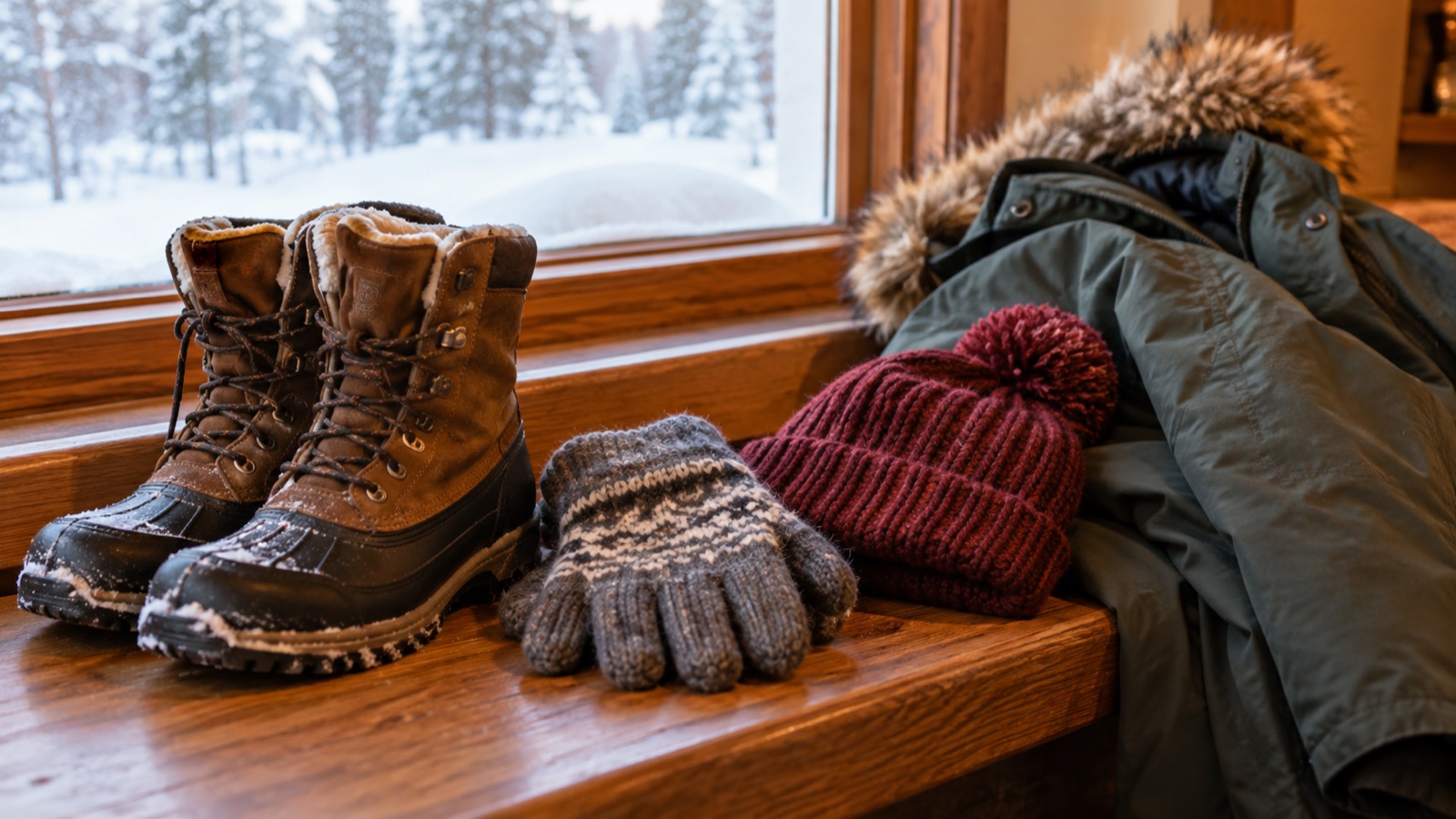
Do not spend the whole equipment budget on a coat. Make a complete list: head and neck protection, gloves or mittens, socks, suitable footwear and leg clothing according to exposure. One forgotten piece can make an otherwise suitable outfit uncomfortable.
Try boots with the socks you will wear. Walk, check stability and comfortable movement. Consider intended use: wet pavements, snow, short journeys or longer activities. Ask sellers about care and product limitations without treating advertising as a guarantee under all conditions.
For hands, test necessary journey tasks. Accessories that seem practical in shops may not suit your use. A dry spare pair can help if travel or activities regularly expose the first pair to moisture.
Finally, check the complete outfit. Gaps between sleeves and gloves, unsuitable trousers or hoods incompatible with bags can go unnoticed when choosing pieces separately. Test everything before a long outing.
Organise drying and care
Federal winter activity recommendations emphasise staying dry and promptly replacing wet clothing or boots. Arrange somewhere to dry equipment according to manufacturer instructions. Simple organisation near the accommodation entrance can prevent leaving the next day with still-damp belongings.
Read labels before washing technical clothing and retain care instructions. Unsuitable treatment may compromise function or durability. When buying second-hand, inspect seams, closures and general condition before deciding savings are worthwhile.
Prepare a small return-home routine: remove accessories from bags, check wet items and put dry ones back. In shared accommodation, agree on storage that does not obstruct the entrance and lets everyone find equipment.
In a fictional example, Noor walks and takes a bus to campus. After a week, she notices accessories remain inside her bag overnight. She changes storage and prepares a second pair of socks for days requiring them, improving comfort without replacing her entire wardrobe.
Buy progressively within your budget
If arriving during cold weather, prepare adequate clothing for initial journeys before relying on later purchases. Compare remaining options once local needs are clearer. Ask student services about campus loan, exchange or second-hand clothing initiatives.
Distribute spending between essential pieces and occasional uses. One ski outing does not necessarily justify investment comparable to everyday boots. Ask organisers about rental options for specialised activities.
Keep receipts and read exchange conditions before wearing new equipment outdoors. Home trials can check size and layer compatibility. Compare quality, condition and intended use instead of choosing solely by brand or highest price.
Adapt activities and recognise urgent situations
Begin winter activities with supervised or easily interrupted outings. Ask about required ability, equipment and opportunities to warm up. Walks near campus differ from remote excursions; do not transfer experience from one to the other.
ECCC cold-weather guidance identifies confusion, speech difficulties and uncontrollable shivering among signs requiring immediate care. Seek shelter and prompt medical help if someone shows concerning signs. In emergencies, call 911.
If a medical condition may affect cold tolerance, ask your health professional for individual advice. General clothing recommendations do not replace that discussion. Also tell activity leaders about needs useful to know before organised outings.
Create your own winter routine
After several weeks, note what works under different conditions and outing lengths. Develop personal reference points: clothing for short journeys, equipment for long waits and preparation for outdoor activities. Adjust these with weather and how you feel that day.
Allow scheduling buffers when conditions complicate journeys. Check campus and transport operator messages for disruptions. Confirm closures or service changes with the relevant organisation rather than only in student conversations.
Winter can also become an enjoyable part of your stay. Choose discovery opportunities matching equipment and experience, then gradually increase duration or difficulty. Learn to enjoy the season while keeping simple ways to return to warmth.