

Where should you shop?
Start by identifying stores that are accessible from your home or school: discount grocery stores, independent or specialty stores and, if there are any near you, public markets. Choose two or three options to compare based on your habits and the travel required.
In Quebec, Super C is an example of a discount chain; in Ontario, Food Basics is another. Their parent company, METRO, describes them this way in its data as of July 4, 2026. These are options to compare, not a ranking: a discount chain will not necessarily be the cheapest for everything you buy.
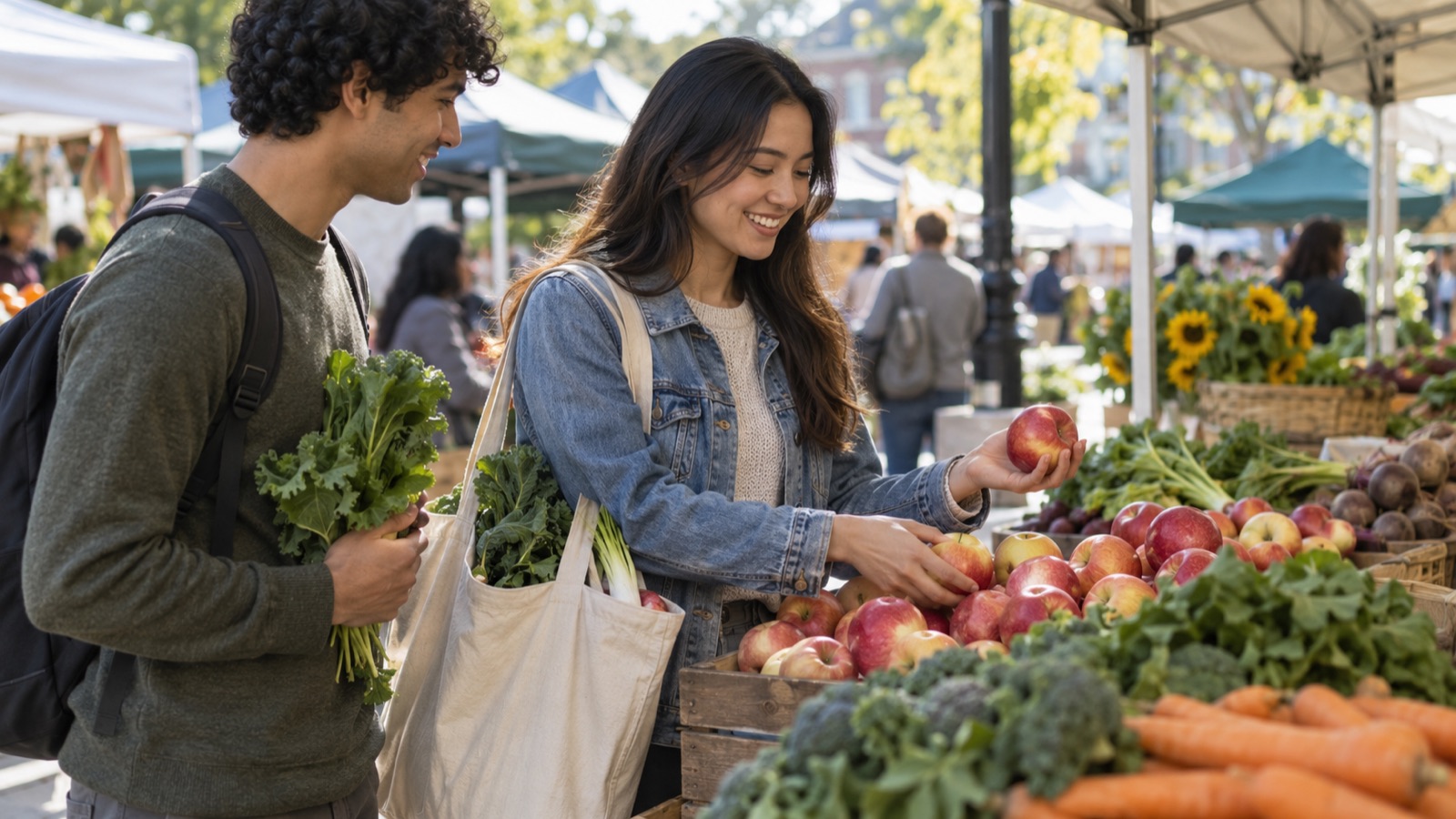
Markets and specialty grocery stores can also help you find the products you are looking for. In Montreal, Concordia’s International Students Office lists several. Compare the prices of the items you are interested in: a market is not automatically cheaper than a grocery store.
Compare a basket, not just a sale
Make a note of the foods you buy often, then check their prices at two accessible stores. To compare different package sizes, use the unit price, for example, per kilogram or per litre. If it is not shown, divide the price by the weight or volume in kilograms or litres.
| Fictional example | Calculation | Unit price |
|---|---|---|
| 500 g package for $3 | $3 ÷ 0.5 kg | $6/kg |
| 750 g package for $4 | $4 ÷ 0.75 kg | About $5.33/kg |
The second package costs less per kilogram, but requires a higher upfront expense. It is worthwhile if you will use the quantity you buy and can store it properly. Otherwise, the smaller package may be a better fit for your situation.
Then compare the total cost of your basket, including any travel costs. Before you leave, check the flyers and review the terms of sales: do you have to buy several items or show a loyalty card? Also ask the store whether it offers a student discount and, if so, what the conditions are. Do not assume that such a discount is available everywhere.
What should you buy to prepare several meals?
A flexible list helps you buy what you will use. Start with a few meals you like, then choose ingredients that can be used more than once. For example, rice or pasta can be served with legumes and vegetables; fruit, another source of protein and seasonings you enjoy can round out meals according to your needs.
Health Canada presents legumes as a budget-friendly option and also suggests frozen or canned fruits and vegetables. Still, compare the prices of available products and read the labels, particularly for sodium and added sugars.
Adapt your list to your allergies, preferences and equipment. A large bag of frozen vegetables is useful only if you have freezer space; a can is not much help if you have no way to open it. If you share a kitchen, also check how much storage space you have.
Sales, dates and storage: avoiding false bargains
A discount is useful only if the product meets a need. Before buying several items, ask yourself when you will use them and where you will store them. A list prepared before you shop can help you resist buying things you will not use.
The “best before” date relates to the quality of an unopened product that has been stored properly; it does not guarantee its safety. Once opened, its storage life may change. A best-before date is different from an expiration date: for products that have an expiration date, follow the applicable instructions and do not consume them after that date.
Follow storage instructions. Food that is unsafe does not necessarily show visible signs of spoilage: its appearance or smell is not enough to guarantee that it is safe.
Where can you ask for food assistance?
If you do not have enough money for food, contact your school’s student services and look for community resources listed by 211 Canada. Ask what is available near you, what the hours are, what documents you need and what the eligibility criteria are. Also mention any allergies or dietary needs. A referral to an organization does not guarantee access to assistance.
Resources vary from campus to campus. At Concordia University, identified emergency resources include meals and possible assistance in the form of grocery vouchers or cards. At McGill University, an emergency loan may be considered in the event of financial difficulty, including when someone does not have enough money for food. A loan must be repaid: it is not a grant.
These examples do not describe the conditions at all institutions. Whether you are a Canadian or international student, ask about the criteria that apply to your situation and check that resources are available before travelling.
Adjusting your budget after your first grocery trips
Keep your receipts for a few weeks and separate food purchases from non-food items. Also keep track of meals bought away from home. You can then see which items you buy regularly, what has gone to waste and whether the amount you set aside for groceries matches your habits.
When comparing the final cost, account for applicable taxes. For GST/HST, basic groceries are generally zero-rated, while some categories, such as soft drinks and candy, are taxable. The tax treatment depends on the product and sometimes on how it is presented; this distinction does not cover all provincial taxes.
Your first grocery basket is a starting point, not a final formula. Adjust it to suit your meals, the stores you can get to and the resources available to you.