

Understand a field between living systems and applications
Biotechnology uses knowledge of living systems to develop methods, products or processes. The field may involve health, food, the environment or industry. To choose training, look at activities you want to contribute to: laboratory work, data analysis, quality control, research or organising production. These directions require different learning.
The biotechnology program at Sheridan illustrates a college pathway combining science, laboratory practice, data and an applied project. This example does not summarise all training. A bachelor's degree or research program may give a different role to foundations, methods and scientific independence.
Do not choose solely a sector presented as innovative. Ask what you will learn to do and under which conditions. Laboratory work also includes preparation, documentation and repeated checks. Your interest in this everyday rigour matters as much as enthusiasm for the field's spectacular applications.
Distinguish technical training from research training
Technical training may prepare you to carry out and document activities following defined methods. University training may deepen concepts, analysis and formulating questions. Research training develops the ability to design an approach for producing new knowledge. These descriptions help compare objectives; exact content needs checking in each program.
Look at progression between scientific foundations, practical work and projects. What independence is expected at the end? How do students learn to interpret an unexpected result? A program advertising much practice also needs to explain knowledge necessary for understanding that practice and recognising its limitations.
If you are considering further study, check the next level's prerequisites. A short qualification may be useful without automatically providing access to a master's degree. If you have already studied in the field, ask which skills will be new and which recognition may be considered. The pathway needs to match your starting point.
Prepare scientific and quantitative foundations
Programs may draw on biology, chemistry, mathematics and data analysis. Compare requirements with previous courses. A gap in a foundation may complicate understanding several activities. Ask about upgrading instead of assuming practice will let you bypass every theoretical difficulty.
Work on reading tables, units and proportional reasoning. In exercises, explain what each item of data represents and check the result's consistency. Precision in notation and documentation is part of learning. A transcription error can affect interpretation even when the rest of the work seems correct.
For data, learn to distinguish observation, processing and conclusion. A result needs to be placed within the conditions in which it was obtained. Digital tools can help, but you need to understand what they calculate and what they do not allow you to claim. This critical attitude will be useful in very different contexts.
Assess laboratory supervision and safety
Ask how students are trained before laboratory access and how activities are supervised. Risks depend on materials, equipment and tasks. The Canadian Biosafety Standard provides, within its scope, for training suited to responsibilities and activities. Your institution needs to specify its own laboratories' rules.
Do not try to reproduce specialised activities alone from a program description. Your research aims to choose an appropriate learning environment, with necessary equipment and supervision. Ask about training, incident reporting and how instructions are understood before hands-on activities.
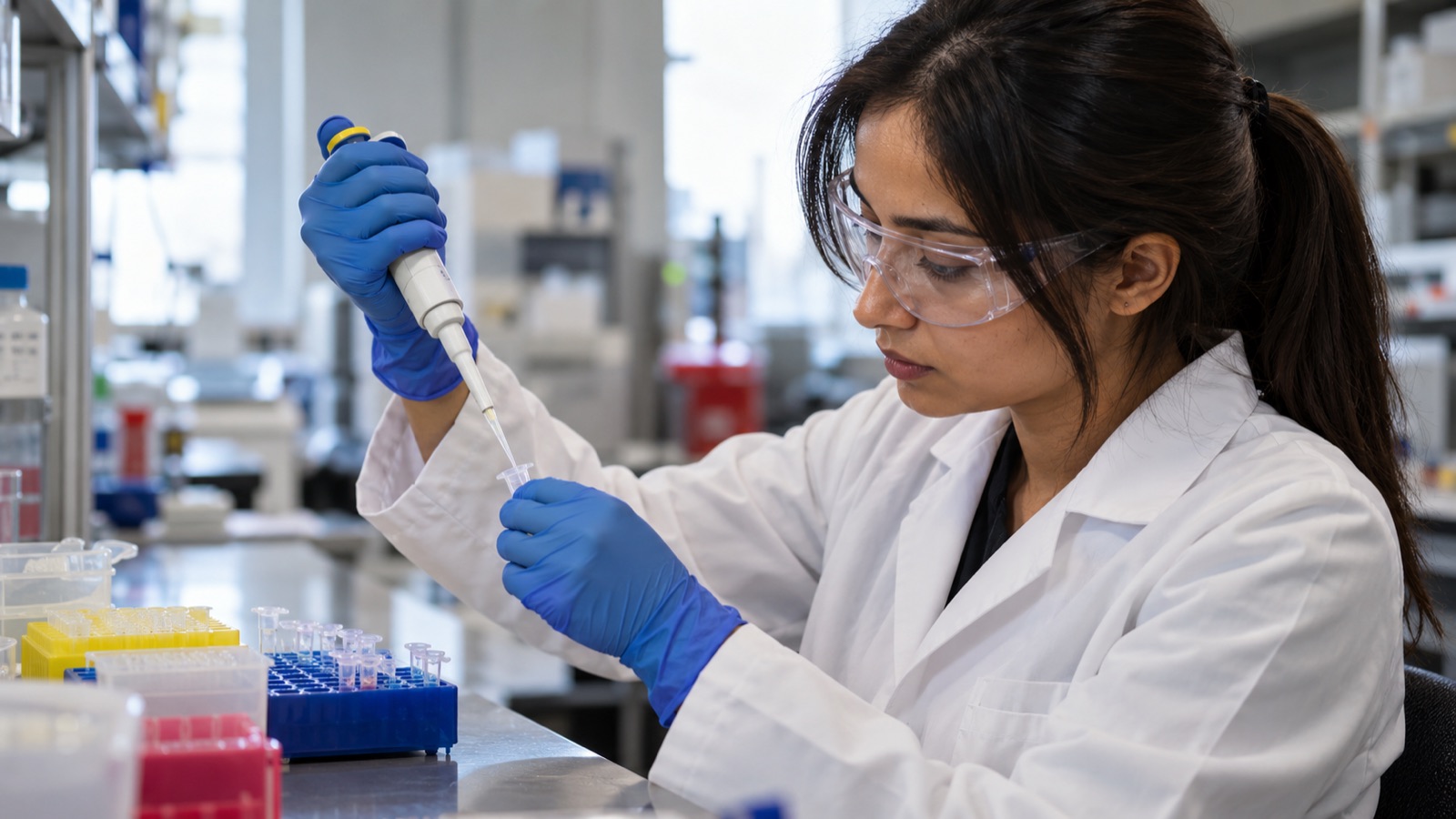
Also look at actual equipment access. Do students observe a demonstration or carry out supervised activities themselves? How are groups organised? What time is provided for analysing results? A laboratory photograph is insufficient to assess the proposed educational experience.
Understand quality and traceability
Work quality does not depend only on the final result. You need to be able to explain what was done, with which items and when. Traceability lets you retrieve stages and examine an anomaly. In training, ask how students learn to maintain documents, control versions and distinguish an observation from a correction.
Fictional example: a team obtains different results between two series of educational measurements. Before concluding there is a new phenomenon, it examines recorded conditions, identifiers and steps. Missing information may prevent interpretation. This case shows why documentation is not a secondary task added after scientific work.
A useful project needs to teach you to flag a limitation rather than conceal it. If a result does not allow a conclusion, explain what is missing and which check would be necessary within authorised arrangements. This rigour is particularly important in fields where a decision may depend on an analysis's reliability.
Examine placements and applications
Compare sectors covered and project opportunities. Training oriented towards the food industry may offer different situations from a pathway focused on biomedical research. Look at courses, partners and activities accessible to students. Do not infer a specific career opportunity solely from the word biotechnology.
For placements, ask about criteria, responsibilities for finding a position and solutions if none is available. Check travel, schedules and expenses. Administrative conditions for staying and working need separate consultation in current official sources. A placement must not be presented as guaranteed by admission alone.
If your project involves a clinical or regulated occupation, check the corresponding professional route. Biotechnology training does not automatically provide access to every neighbouring health role. The title, permitted activities and appropriate body's requirements need examining according to the place where you wish to practise.
Prepare a coherent application and profile
Present scientific prior learning and relevant experiences precisely. If you participated in a project, explain your role, general methods and what you learned without disclosing confidential information. For a research application, look for an actual match with the team's work and skills you want to develop.
Add materials costs, required personal equipment and any project periods to the budget. Ask what is provided before buying. Throughout training, keep authorised records of progression: documentation quality, analysis, teamwork and communication. They will make your profile clear beyond the qualification's name and help you choose an appropriate next step.
To explore a sector without disclosing sensitive data, choose a public project opportunity and identify required skills. Separate scientific knowledge, tools, documentation and collaboration. Then compare this list against learning assessed in the program. Identical words are insufficient: ask which work proves the stated mastery. This approach will help identify a skill to deepen, but also avoid paying for training largely repeating prior learning. Keep questions for a focused discussion with the person responsible for the pathway.