

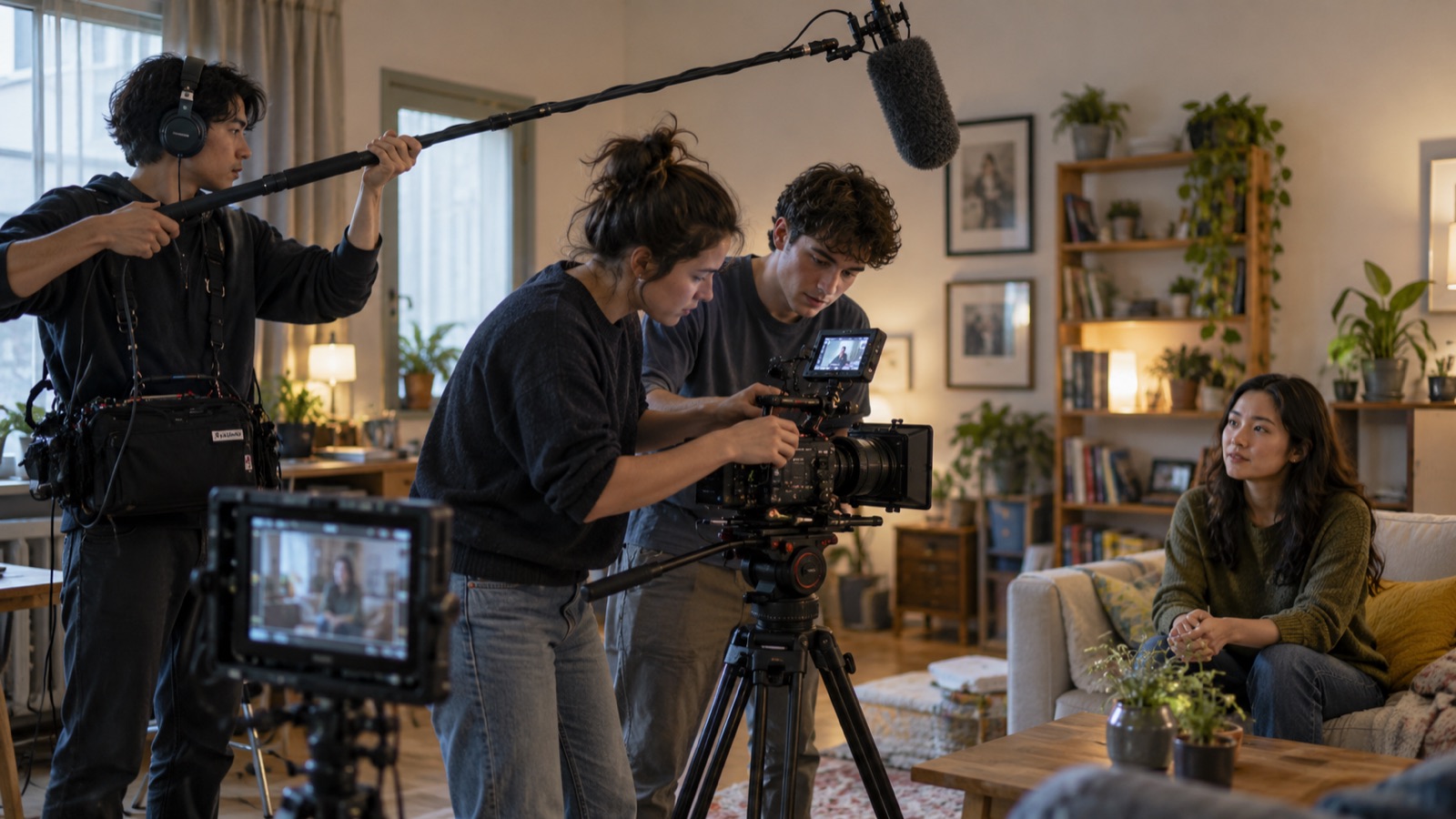
Choose production tasks that interest you
Television and broadcasting bring together occupations involved before, during and after broadcast. Writing, preparing a shoot, recording sound, framing shots, editing and coordinating a team do not require exactly the same abilities. To choose training, start by describing tasks you want to try and those you already know.
Do not reduce your project to the visible role on screen or at the microphone. A program also relies on people organising content, checking technical elements and ensuring continuity of work. Understanding these responsibilities will help you collaborate even if you later choose a different specialisation.
Make an initial list of appealing formats: live program, recorded interview, fiction, documentary, podcast or short content. Specify what you enjoy in each. Pace, relationships with participants and preparation time change by format; training needs to help understand these differences.
Read programs beyond the word television
The Media Production program at Toronto Metropolitan University presents writing, video production, radio and sound work among explored fields. This example shows why actual content needs examining: training may prepare for several media rather than a single broadcast format.
The program's 2026–2027 calendar describes a four-year bachelor's degree combining creative work, production, critical theory, law and media economics. It specifies that students admitted from fall 2026 onwards can no longer complete a formal concentration. Therefore distinguish explored fields from former concentrations still described for previous cohorts. Use this example as a comparison reference without attributing its duration or requirements to another qualification.
For each curriculum, distinguish required courses, workshops, final projects and optional opportunities. Ask when students access certain specialisations. An appealing option may require results, prerequisites or selection; it must not be counted as secured from application.
Also compare entry level. Training after secondary school, a technical qualification and specialisation after previous studies may meet different needs. Your comparison needs to start with experience, available time and skills you want to develop.
Observe how the program has teams work
Ask whether projects allow trying several roles and how responsibilities are divided. A well-explained rotation may help understand others' work before choosing your place. It may also reveal unexpected interest in organisation, sound or editing.
Ask how teachers assess individual contributions in a group project. The final result does not always show who prepared, recorded or corrected an element. Learning to document your role lets you build an honest portfolio and discuss difficulties without attributing all credit or blame to one person.
Fictional example: a team makes a short interview program. The student responsible for preparation organises questions and sequence order; another person handles sound; a third coordinates transitions. In the review, everyone explains decisions and necessary adjustments beyond the simple impression that the program succeeded.
Check actual equipment access
A studio visit or photograph is insufficient to understand future everyday work. Ask about bookings, access hours, necessary training and loan conditions. Ask how much time is provided to prepare, carry out and repeat an exercise when the first result is insufficient.
Examine personal needs: computer, headphones, storage, software and small accessories. Wait for official recommendations before a major purchase. The program may provide certain tools, require others or use an environment your current equipment does not support.
Organisation and file management are also part of work. For projects, adopt understandable names, identified versions and backups. Ask which practices the school teaches for exchanging files among team members. An excellent take may become unusable if nobody can find the right version.
Finally, plan travel to filming locations and equipment transport. A program in a city you enjoy may organise activities away from the main campus. These arrangements affect schedules, costs and sometimes housing choices.
Learn to prepare before recording
To explore the field before studying, design a short exercise with simple resources. Write the objective, audience, desired duration and necessary elements. Make a shot or sequence list, then prepare questions if someone participates. This work will help observe actual difficulties instead of accumulating recording hours.
After a first version, ask someone to describe what they understood. Passages you consider obvious because you know the topic are not necessarily obvious to the audience. Revise order, explanations or transitions based on this observation.
When comparing training, look for the role of critical feedback. Ask how students discuss sound, pace, image and meaning. Precise feedback on a difficulty offers more for progression than a general judgment only about the final effect.
Include rights, accessibility and safety in projects
Ask how the program teaches filming permissions, music use, third-party images and dissemination rules. Content available online does not automatically give you the right to incorporate it into a public production. Clarify rules with supervisors before publishing school work.
Also prepare information given to participants: project nature, intended audience and dissemination conditions. If someone is a minor or the topic sensitive, ask for the institution's particular procedures. A good production relationship begins with understood expectations and commitments you can actually honour.
Ask the program about subtitles, transcripts and other content accessibility dimensions. These elements benefit from advance planning within the project. For studio activities or trips, follow safety instructions and required training; do not turn a student exercise into an opportunity to improvise with equipment you have not mastered.
Prepare the application, placements and next steps
Application documents vary by program and term. Check current requirements and send a portfolio only according to instructions. If work is requested, identify your contribution, context and resources used. A well-explained short production may show potential more clearly than a long edit without context.
For a placement, distinguish its planned role in the curriculum, help finding it and obtaining a particular experience. Ask about selection arrangements, possible locations and expected expenses. Separately check administrative conditions applicable to international students and do not assume an advertised activity is automatically accessible in your situation.
Your graduation portfolio should explain both the result and how you work. Choose representative projects, explain responsibilities and show improvements made. Assess professional prospects through tasks and skills required, without inferring guaranteed employment from a studio, partner or familiar name on a brochure.