

Turn your interest into a training objective
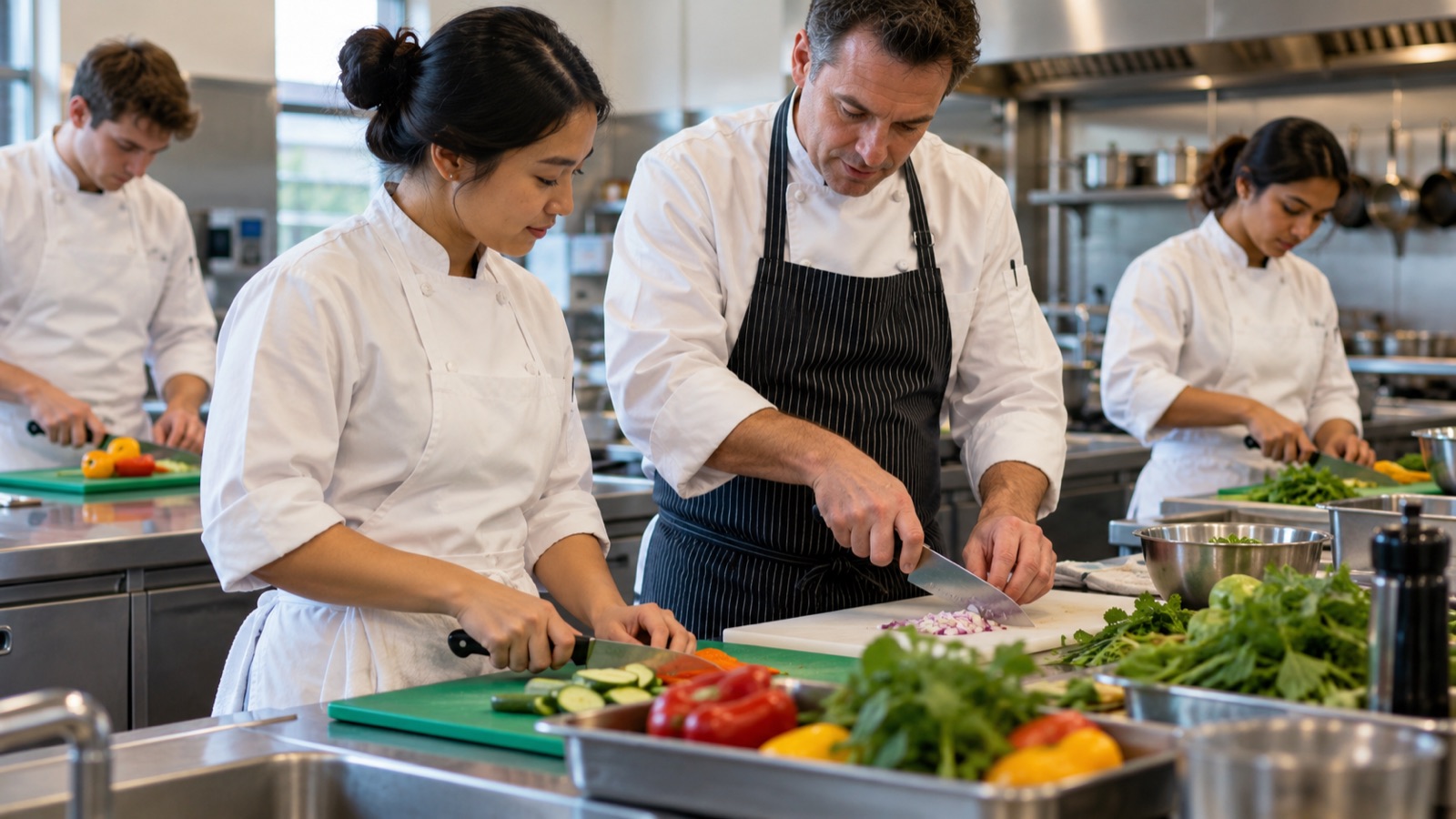
You may enjoy cooking for people close to you and want to discover a professional setting, or already have experience and seek specialisation. Start by specifying your starting point. Which tasks do you perform confidently? Which still need much time or help? Do you want foundations, deeper pastry skills, understanding production management or exploring other techniques? These questions prevent choosing a program solely from dish images.
Also observe your relationship with pace and organisation. Culinary preparation involves quantities, deadlines, instructions and simultaneous tasks. Training needs to let you learn these dimensions with appropriate supervision. Distinguishing enjoyment of creating a recipe from making it regularly in a group setting is useful. You can better discuss your project and needs with schools.
Compare qualifications and actual practice
The Culinary Arts program at SAIT presents a two-year diploma with substantial culinary laboratory practice. This description is a precise example rather than a required model for all Canadian training. Other pathways may differ in duration, prerequisites or objectives. Note the awarded qualification and ask how it connects with intended professional stages.
Read courses through techniques actually practised, the number of production situations and assessment arrangements. Observing a demonstration does not offer the same experience as repeating an exercise with individual feedback. Ask how students progress and groups are organised. Also check hygiene, management, costs and communication beyond the most visible culinary creations.
If you have prior experience, ask how it may be assessed without assuming automatic recognition. Keep relevant attestations and task descriptions. If starting out, check pre-entry expectations: vocabulary, equipment, clothing and any preparation. A good decision rests on the gap between your current level and skills the program actually allows you to acquire.
Understand everyday kitchen learning
Ask what a course week looks like: schedules, personal preparation, practice, cleaning, theory and assignments. Kitchen time goes beyond cooking or plating. Workstation organisation, tidying and following procedures are part of learning. You need to know how these dimensions are taught and assessed to arrive with a realistic program picture.
During a session, learn to read instructions before starting. Identify lengthy stages, tasks that can be prepared and points requiring teacher approval. A simple preparation list may prevent omissions. After the exercise, note what caused delay or error. This record makes progress more concrete than recalling only a successful or disappointing dish.
Communication matters in a shared kitchen. Signalling a need, confirming instructions and warning of a change let others organise work. If the teaching language is not your usual language, prepare vocabulary for actions, tools and quantities. Request repetition of instructions you did not understand, particularly involving safety or a sensitive procedure.
Check practical conditions and expenses
Ask for the exact list of required clothing, shoes, tools and supplies. Some resources may be provided or accessible on site; others remain yours to pay. Do not buy a complete set before recommendations. Ask the school about storage, maintenance and replacement rules. An initial expense may also entail costs during training.
Add travel to class schedules and, where applicable, practical experiences. Distant housing may seem advantageous but complicate an early start or late return. Compare total cost and actual journey. For particular culinary projects, ask whether ingredients are included and how additional needs are handled. Your budget needs to distinguish program obligations from personal purchases for practice outside class.
Take a fictional example: a student wants to buy several specialised tools on arrival. After discussion with the school, he discovers some are used only later and others available on loan. He then reserves part of the budget for replacements and travel. This provides more flexibility than purchasing from a commercial list unrelated to courses taken.
Analyse practical experiences and placements
Experience in a kitchen or establishment may offer very different tasks depending on the organisation. Ask who finds the place, how assignments are defined and what educational follow-up is provided. Understand what you will actually practise, at which pace and with which contact person. A restaurant's name is insufficient to assess an experience's value for progression.
Check particular conditions linked to your international student situation before accepting an activity. Training admission and authorisation for work or a placement are distinct matters. Ask appropriate services to direct you to current rules. Avoid financing your entire project through assumed immediate employment or placement pay not confirmed in writing.
To benefit from experience, set observable objectives: better organising production, understanding a procedure or improving a precise technique. Note situations and feedback. This journal helps discuss progression with the supervisor and later present experience beyond a list of places attended.
Learn to connect recipe, quantity and organisation
A useful personal exercise prepares a simple menu for a defined number of people with a fictional budget and schedule. List ingredients, stages and necessary equipment. Identify overlapping tasks and those requiring immediate attention. Afterwards, compare the plan with what actually happened. The objective is observing organisation rather than simulating every professional kitchen constraint.
When adapting a quantity, check results instead of assuming everything changes identically. Tools, containers and available time may change how you proceed. For hygiene, allergens and storage questions, apply taught procedures and appropriate authority requirements. Advice found in a recipe does not replace training on these topics.
Prepare several possible next steps
The culinary sector includes varied activities and environments. Compare tasks, hours, responsibilities and expected skills in those that interest you. Do not regard a qualification as a promise of immediately leading a kitchen. Progression also depends on experiences, demonstrated skills and requirements applicable to the chosen position or professional pathway.
Before accepting admission, summarise your objective, techniques to learn, expected expenses and open questions. Request concrete school answers, then keep them with your application. Well-chosen training needs to provide regular practice, feedback and understanding of your work while helping build a realistic project beyond the image of an exciting occupation.